Back in Canada

I have been back in Canada for one week – adjusting back to daily life and the local time zone. It has been a busy week catching up with work and gardening at home.

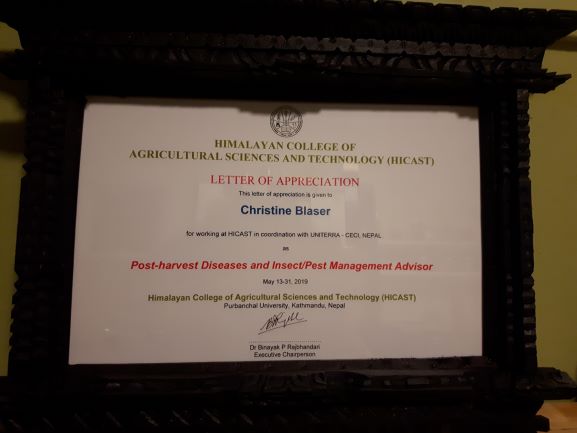
The last week I was in Nepal my internet access at the local house was spotty which prevented me from posting to the blog. While at HICAST, I was documenting all the information from the in-lab training into electronic files and obtaining pricing quotes for antibiotics/anti-fungal drugs and ELISA testing kits for HICAST. The college has limited ingredients when it came to some of the recipes for making media we use in Canada. Uniterra has a $500 budget for each volunteer that can be used for training and/or materials to help the partner organization. My last Friday in Nepal, we had a final meeting to go over my mandate and what I achieved while in Kathmandu. I gave a short PowerPoint presentation on my work, and I was surprised with a letter of appreciation from HICAST. As I was the 3rd person from the University of Guelph to volunteer at HICAST, there is a strong interest to explore a partnership between the college and the university.
My time in Nepal was short, and I sometimes felt as if I was not achieving much while I was there. However, I enjoyed my time there and from the reaction at the final meeting, my impact was more useful than I had thought. And that I think is the purpose of volunteering. Namaste!
Lab work, part 2

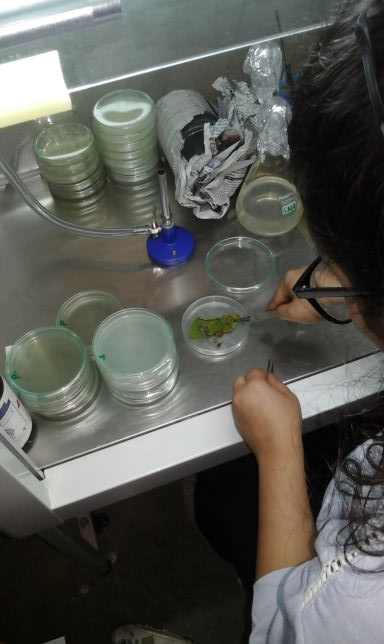
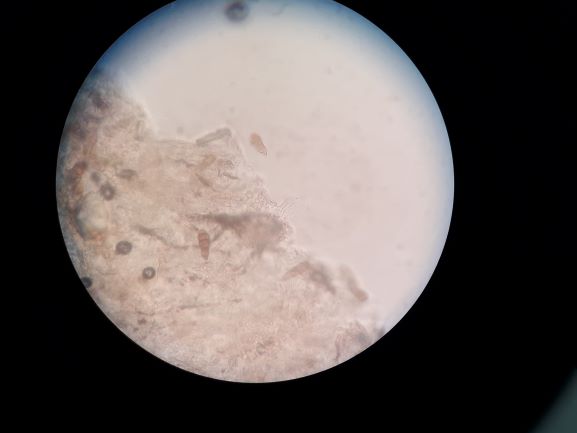
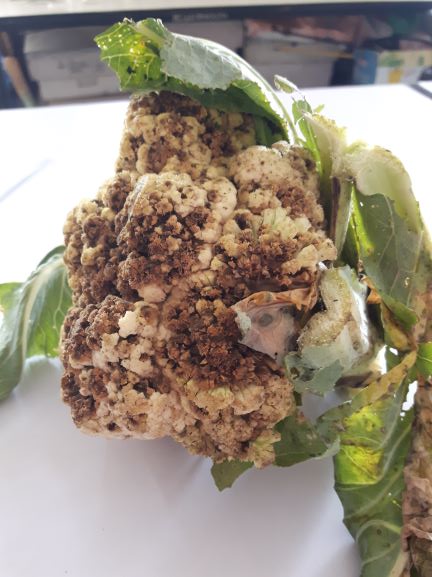
Yesterday, we made use of the media. The students helped us find some field crops – beans, potato, wheat, citrus, tomato and cauliflower (apparently, the whole field looks like the picture to the left – not a good crop. The leaf spot spread to the head of the cauliflower). We were hoping for late blight on potato, since we wanted to make use of the PARPH media we made. PARPH is good for isolating Phytophthera sp., the causal organism for late blight. No such luck, it was Alernaria sp., the organism that causes early blight. We were also desperately looking for any bacterial diseases, but so far, we have not been successful. It could be because it has not rained much lately and the conditions are not favourable for bacterial problems… that might change when the rainy season starts. All fungal and insect/mite problems.

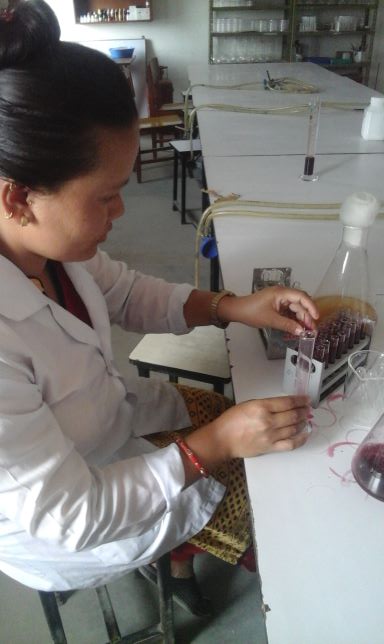
Plating plant tissue – practice for students
Alternaria

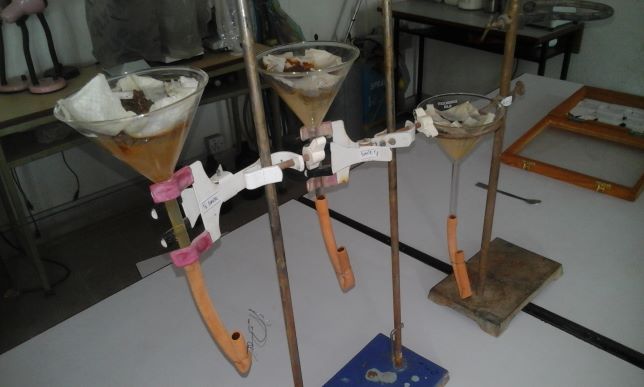
We did set up some soil from a tomato field using the Baermann funnel method. But although the funnels technique worked, I did not find any plant parasitic nematodes.

Lab work

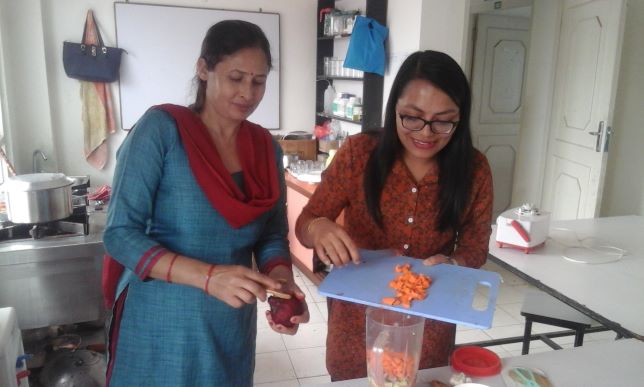
The plant pathology section at HICAST does not have a huge amount of resources. I have documented the media (agar) recipes used to isolate plant diseases at the Plant Diagnostic Clinic in Canada. Unfortunately, most of the antibiotics required are not available here including V8 juice (it is an ingredient for nutrient purposes in one of the recipes). So, we made media using what we had, which meant chopping vegetables to make our own V8 juice.

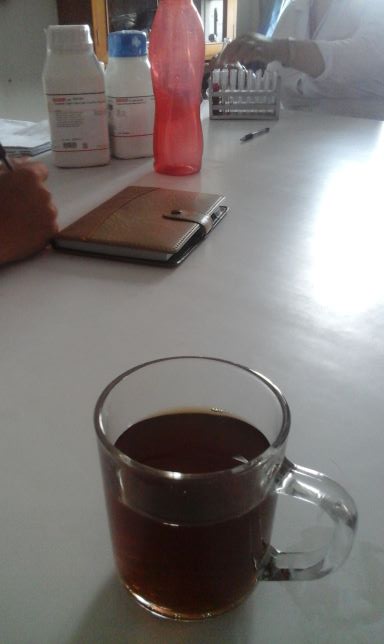
Also, when in Rome… having tea in the lab is normal. The windows are also open, which although lets a nice breeze in, may not be the best thing for keeping things sterile.

Adjusting and change

The mandate has changed somewhat from the initial post-harvest pest/disease management advisory role. Last week was a bit confusing, frustrating and overwhelming. I wasn’t quite clear what the HICAST people were discussion in Nepalese but it turned out that I should participate and give a workshop for 60 students plus government officials. I could have talked about the Ontario experience, but was not prepared to lead, organize and train students about the issues concerning plant diseases and pests I have no experience with. After voicing my concern, it was decided that I should concentrate on lab methods. That might be a better idea. Now we have to figure out what is possible with the resources they have.

Unexpected

The work week is 6 days in Nepal. The day off is usually Saturday, however at HICAST, the day off is Sunday. I had unexpected long weekend because Saturday was a religious holiday – Buddha’s birthday. Happy birthday Buddha (born in 623 BC in the area of Lumbini, Nepal)!

The commute

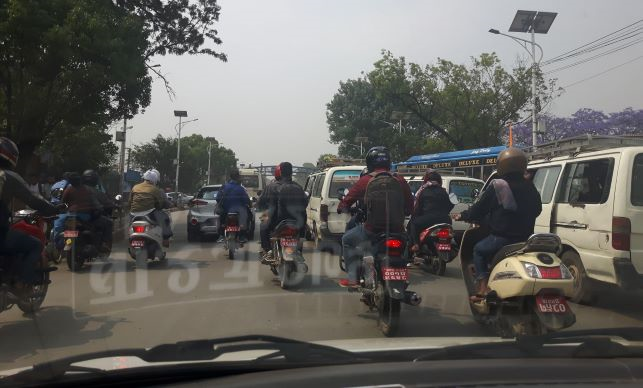
Normal traffic

I’m lucky to have a driver that drops me off and picks me up everyday at the work location. I might never complain about the traffic and driving skills of others in Canada again (maybe). Traffic here is organized chaos. That is NOT an understatement. Nepalese drive on the left (like England), here the comparison ends. Top speed on everyday roads is about 40 km, which probably explains why I actually have not seen any accidents. Bikes, cars weave around pedestrians and what ever else might be crossing the road, including cows (yes, there are cattle walking freely on the road). From what one driver has said, you can control what you see in front of you, and don’t worry what happens behind you. There are very few traffic lights (not sure if anyone would care). If you want to turn right, you signal (yes, they still do), then look for a gap or just inch yourself into on coming traffic. There is no waiting because there is probably not going to be a gap any time soon, and everyone drives around you anyway. Oh and it is normal to honk, which is to signal that I’m behind you or coming around a corner. That is pretty much a constant.

HICAST initial visit

This morning I visited my partner site for the first time. The Himalayan College of Agricultural Sciences and Technologies (HICAST) has two campuses (one for veterinary sciences and one for the agriculture and food sciences). I’m stationed in the temporary location for agriculture and food, which is located right beside Ring road (the busiest highway in Kathmandu). A new building is being built which I believe is supposed to be ready next year at the same location where the vets are located. The initial meeting went well, and we have had some good ideas on what could be accomplished with a mandate of post-harvest pest/disease management. There is a large problem of spoilage. Before the earthquake, a good system was in place for identifying diseases and pest in the field. The college had trained plant doctors who were resource people in the villages. Problems could be identified on the spot or could be sent into the Plant Clinic at the college, not unlike our Plant Disease Clinic at Lab Services. However, post-harvest problems have not been addressed, which is where I supposedly come in 🙂.

Jet lagged

First full day in Kathmandu. Feeling slightly jet lagged, but okay. Woke up at around 5 am and could not get back to sleep. Having barking dogs throughout the night didn’t really help. The three intern students and I (who are all sharing the house) had our orientation today, and Uniterra (CECI) organized a lunch for all the volunteers. Lunch was great – there is some good food in Nepal (very Indian influenced).

One day left

It is my last day at home in Canada before the big adventure in Kathmandu, Nepal. I’m feeling a bit aprehensive about the unknown, but the assignment at the Himalayan College of Agricultural Sciences and Technologies as a Post harvest insect/pest management advisor will be a great adventure and experience.

Design a site like this with WordPress.com
Get started